


Last Updated: November 14, 2026
Quick Summary
Quiet dog clippers for nervous dogs are tools with a smooth, low-pitched motor and light vibration, since pitch and buzzing against the skin often upset anxious dogs more than raw loudness. Choose variable-speed tools that cut cleanly, and introduce them in short, staged sessions so the dog builds calm associations.
- Judge quiet dog clippers by pitch and vibration, not just volume.
- Test vibration by holding the tool at its lowest speed and feeling the casing.
- Choose variable-speed tools so you can start slower and quieter.
- Stop sessions when the dog pants, lip-licks, freezes or pulls away.
- Consider a nail grinder if the snap of nail clippers causes stress.
Table of Contents
- Why Noise and Vibration Matter Most for Nervous Dogs
- Quiet Dog Clippers Compared: Sharperedges Options and Trade-offs
- How to Get a Dog Used to Clippers Step by Step
- Dog Nail Grinder for Nervous Dogs: When It Beats Clippers
- Choosing Your Next Tool for a Calmer Grooming Session
- Frequently Asked Questions
Why Noise and Vibration Matter Most for Nervous Dogs
Noise and vibration cause more grooming stress than almost anything else in the salon or at home, which is why choosing from a range of quiet dog clippers matters so much. For a nervous dog, the sound of a motor is often the first warning that something unpleasant is about to happen, and vibration against the skin keeps that feeling going. Choosing a quiet clipper is therefore the single biggest step toward a calmer session.
What the dog is actually reacting to
A clipper that sounds acceptable to a groomer can still set a dog on edge, because the pitch of the motor matters as well as its volume. Two tools with similar loudness can produce very different reactions if one whines at a higher frequency or carries a harsher edge to the tone.
Vibration is the second channel. A heavy, rattling body transmits buzzing into the skin, and many anxious dogs find that harder to tolerate than the sound itself because it continues for the whole session and cannot be escaped by moving away. Lighter tools with a smooth motor usually feel more comfortable to the dog, and they are easier on the groomer's wrist during long sessions.
How to judge noise and vibration before you buy
Most product descriptions use subjective words such as quiet or low-noise, which tells you very little. A more reliable approach is to compare tools on a consistent basis:
- Pitch over volume. Listen for a high whine rather than raw loudness. A lower, smoother tone is usually better tolerated.
- Vibration in the hand. Hold the tool running at its lowest speed. If it buzzes strongly through the casing, the dog will feel that through the blade.
- Speed settings. Variable-speed tools let you start slower and quieter, which matters far more for a nervous dog than a single high-speed setting.
- Blade condition. A dull or clogged blade drags and rattles, so a well-maintained tool is a quieter tool.
- Coat suitability. A quiet but underpowered tool will stall in thick, curly or matted coats, and the stalling, tugging and repeated passes create more stress than a slightly louder tool that cuts cleanly in one pass.
Matching the tool to the coat
Quiet operation is only useful if the tool can do the job. As a rough guide:
- Fine or short coats suit lighter, quieter trimmers and detail tools.
- Curly or dense coats need more torque; a low-powered quiet tool will snag and pull.
- Double coats are usually best handled with appropriate blade work and de-shedding rather than a single close clip.
- Matted coats should not be forced through with any clipper. Matted hair pulls on the skin, and working through it at home is painful and stressful.
When to stop and seek help
Watch out: if a dog is panting heavily, lip-licking repeatedly, trying to climb away or freezing rigidly, the session has already gone past the point of learning. Stop, give the dog space, and end on a calm note. Repeated stressful sessions make the next attempt harder. If a dog cannot tolerate the sound even at a distance after several short introductions, or if the coat is badly matted, a professional groomer or your vet is the safer route rather than persisting at home.
Sharperedges selects its tools with this in mind. Every product in our range is personally tested before it goes on sale.
Quiet Dog Clippers Compared: Sharperedges Options and Trade-offs
Not every quiet tool is suited to every job. Before you buy, decide whether you need a full-body clipper or a finishing tool for detail work. Our current range covers both needs, and the difference matters.
| Product | Price | Best For | Trade-off |
|---|---|---|---|
| Sharperedges Trimmer | £55.00 | Paws, faces, hygiene areas, finishing | Not suitable for full grooms |
| Sharperedges Nail Grinder | £36.00 | Nail care for nervous dogs | Requires a full charge before use |
| Replacement Trimmer Heads | £12.00 | Keeping the trimmer sharp | Only fit Sharperedges trimmers |
| Trimmer Cable | £5.00 | Replacing a worn charging cable | Only fits the newer white trimmer |
Price
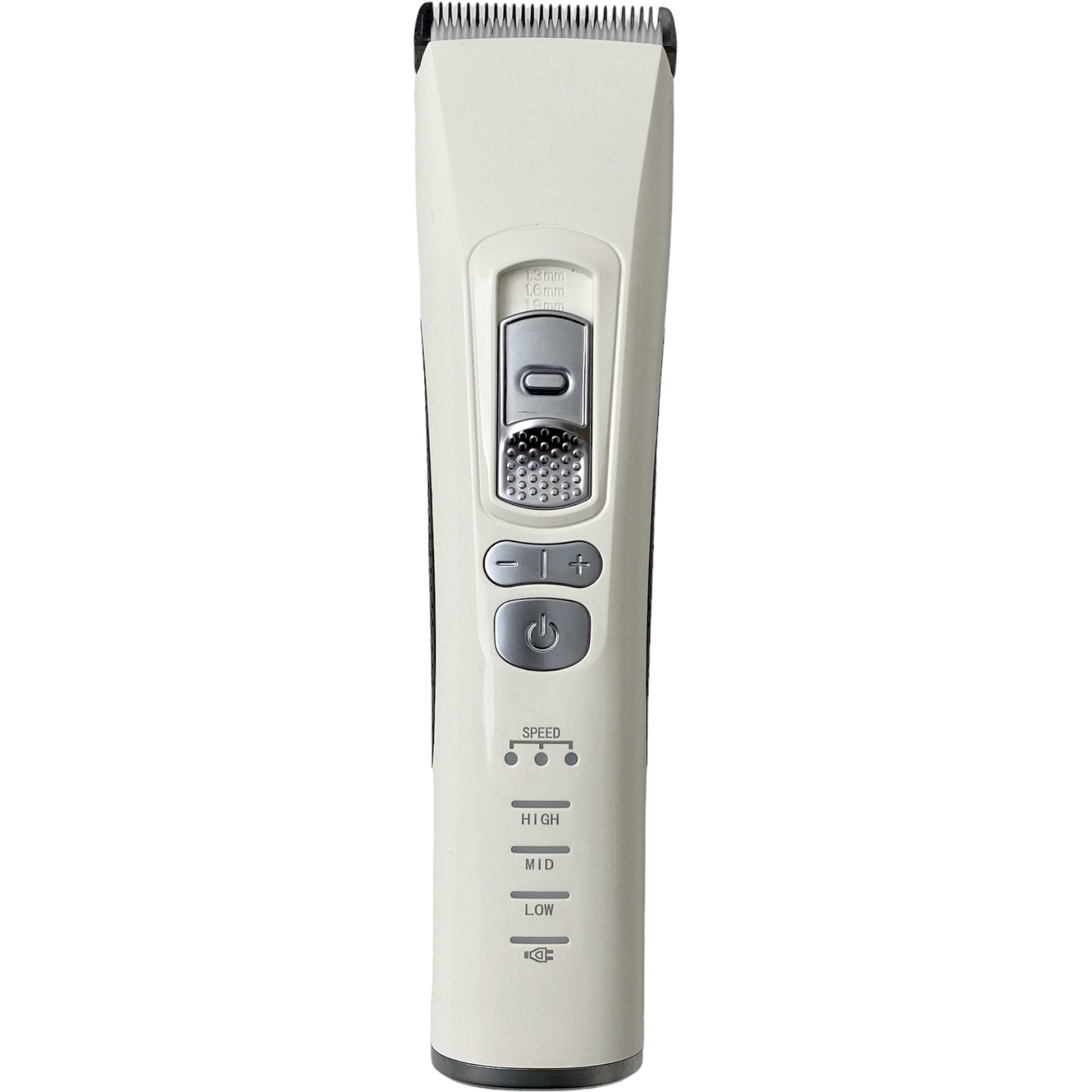
The Sharperedges Trimmer is built for detail work. It runs on three variable speeds and offers four cutting length settings. It is a trimmer rather than a clipper, so it is not suitable for full grooms or all-over body work.
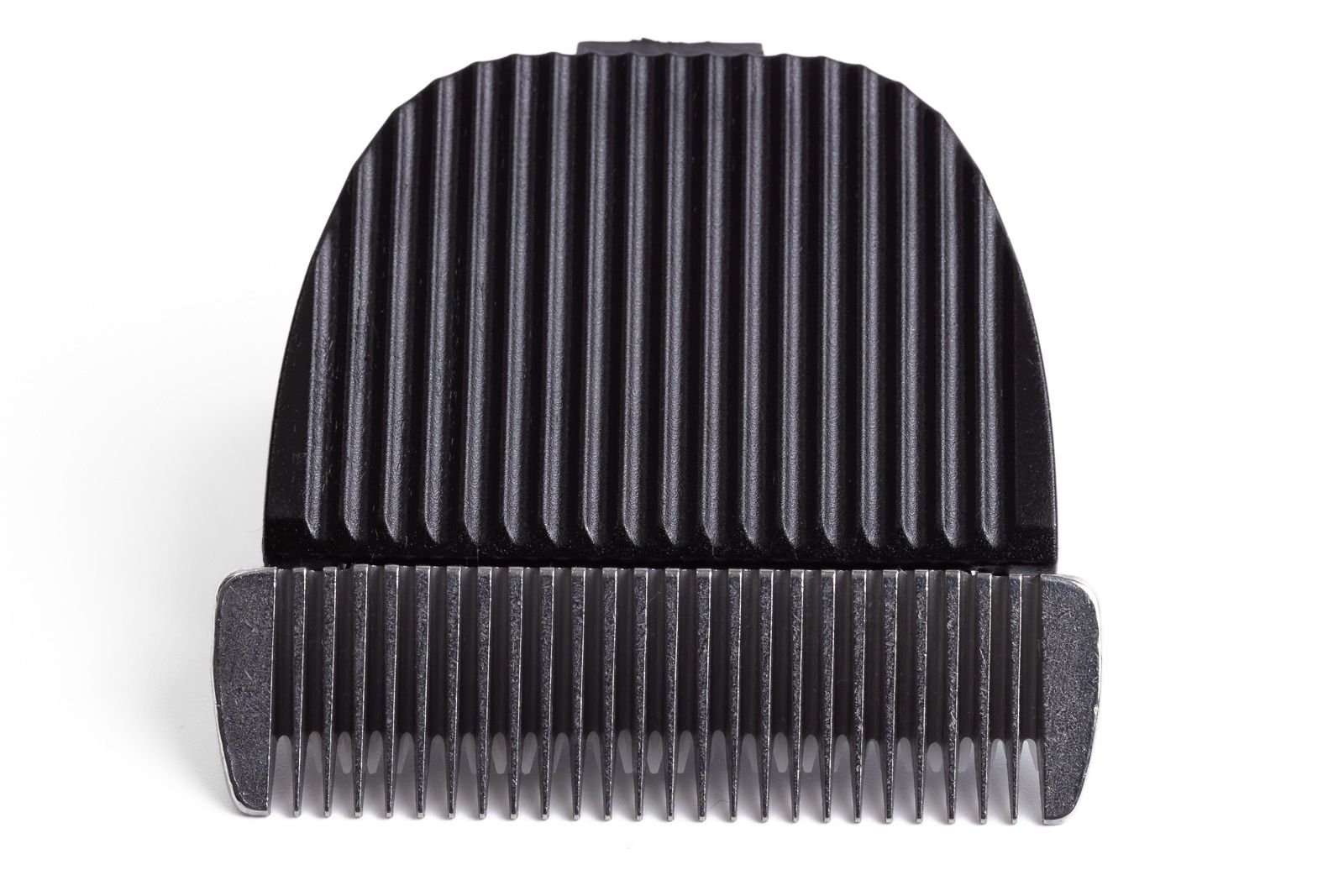
If you already own a Sharperedges trimmer, replacement pet trimmer heads are available. Note that these heads are ceramic and cannot be sharpened, and they are not suitable for full grooms or for use with metal comb attachments.
How to Get a Dog Used to Clippers Step by Step
Introducing a nervous dog to the sound of clippers works best in small stages. Rushing the process often makes the dog more fearful, so give it time at each step. The aim is not to get through a groom quickly but to build a history of calm sessions the dog can draw on next time.
Before you start
- Pick a quiet room with a non-slip surface and no other pets.
- Have high-value treats ready, cut small so you can reward often.
- Start when the dog is rested, not just after exercise or a meal.
- Charge the tool first, so a battery warning does not cut a session short.
- Keep sessions short. A few minutes done calmly beats a long session that ends in stress.
The staged plan
- Tool off, on the floor. Let the dog sniff the clipper and walk away. Reward any calm curiosity. Repeat over a couple of days until the tool is unremarkable.
- Tool off, in your hand. Pick it up, put it down, reward. Then hold it briefly against the dog's shoulder without switching it on.
- Tool on, at a distance. Switch on at the lowest speed across the room. Reward calm behaviour, then switch off. Build up to the tool running nearby while the dog eats or rests.
- Tool on, brief contact. With the tool running, touch the flat of the blade briefly against a low-stress area such as the shoulder, then withdraw. One or two seconds is enough at first.
- Short passes on one area. Work up to a few short strokes on a single body area over several days before moving on.
- Add areas gradually. Legs, paws, face and tail are usually the most sensitive, so leave them until the dog is relaxed about the body.
- Lengthen sessions slowly. Only extend time once the dog stays relaxed throughout the previous step.
Reading the dog
A common mistake is continuing when the dog starts to pant, lip-lick, yawn repeatedly, tuck its tail, freeze or pull away. These are early stress signals, and they usually appear before a dog growls or snaps. Stop the session and go back a step. Pushing through fear usually makes the next session harder, not easier.
Watch out: if the dog reacts strongly at step three even after several attempts, do not keep repeating it in the hope of wearing the dog down. Change the distance, lower the speed, or shorten the exposure, and consider whether a professional groomer or your vet should assess the dog first.
Keeping progress
- End every session while the dog is still calm, not after a setback.
- Use the same room and the same routine so the dog learns the pattern.
- Keep the tool clean and lubricated, because a rattling or dragging blade undoes the work of a quiet motor.
- Expect good days and bad days; a bad day is a reason to go back a step, not to abandon the plan.
For more calming techniques to use during sessions, see 9 Things Dog Groomers Can Do To Keep Dogs Calm During Grooming Sessions.
Dog Nail Grinder for Nervous Dogs: When It Beats Clippers
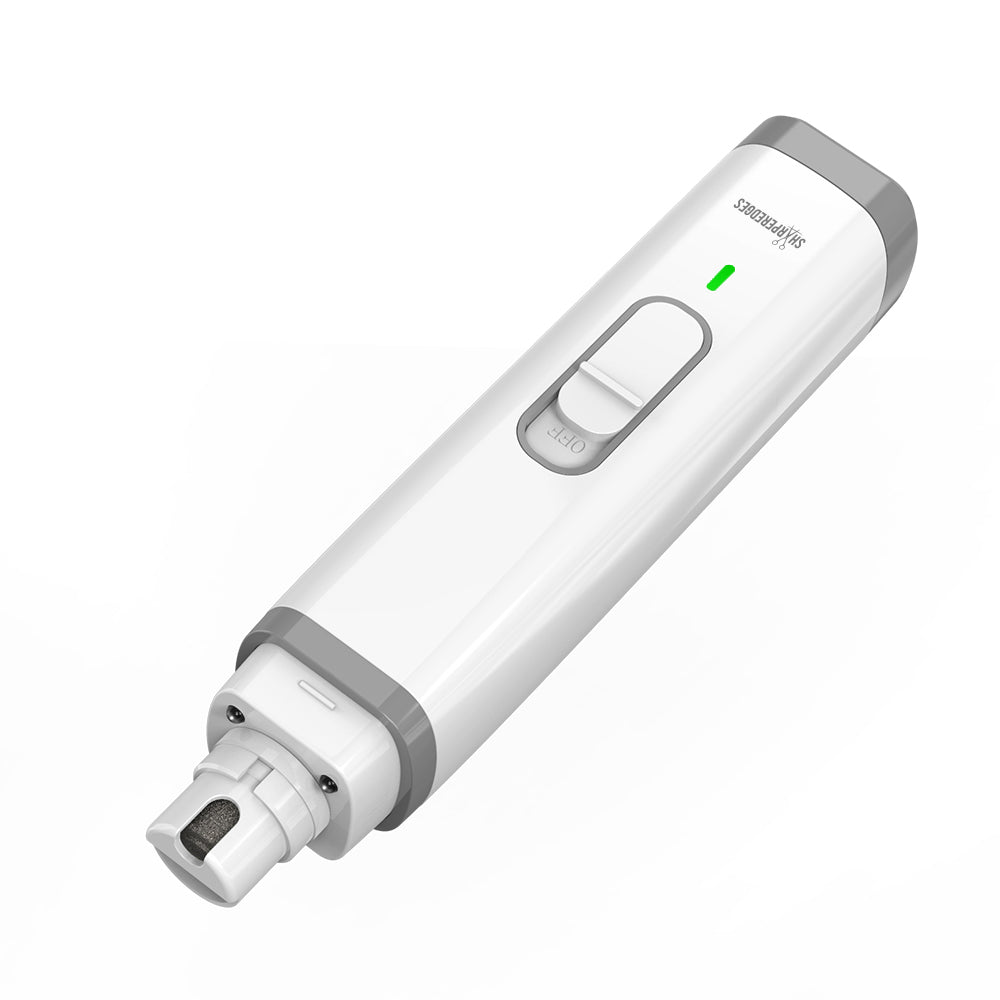
Many nervous dogs dislike nail clippers because of the snap and the pressure on the toe. A grinder removes small amounts of nail gradually, which often feels less threatening. The Sharperedges Nail Grinder is quiet, uses a diamond head and has LED lights to show the quick.
Choose a grinder when the dog tolerates the sound but reacts to the snap of clippers. Stick with clippers if the dog accepts them well already. Keep the grinder charged before each use, as the manufacturer advises.
Choosing Your Next Tool for a Calmer Grooming Session
The right tool depends on the dog in front of you. Start with a quiet trimmer for detail work, add a grinder if clippers cause stress, and keep the blades and cables in good condition so the tools stay quiet and efficient. Regular care, including how to lubricate dog grooming clippers properly, helps prevent the rattling and noise that unsettle anxious dogs.
Ready to find the right tool? Browse the full range at Sharperedges and choose the option that suits your dog's temperament and your grooming style.
Frequently Asked Questions
What are the quietest dog clippers for nervous dogs?
Quiet operation depends on motor design and how the tool is used, so judge clippers by how the sound feels to your dog rather than by a single rating. Sharperedges' Trimmer, sold for £55.00, has a super quiet motor and three variable speeds. It is built for detail areas such as paws, faces and hygiene areas rather than full body clipping.
Are cordless dog clippers quieter than corded clippers?
Cordless tools remove the cable, which can startle a nervous dog when it catches or drags across the floor, so they often feel calmer to handle. However, noise comes from the motor, not the power source, so a cordless tool is not automatically quieter. The Sharperedges Trimmer is USB rechargeable and cordless, and its nail grinder is also USB charged. Fully charge each tool before first use so you do not have to stop mid-session.
How do I use clippers safely around a nervous dog?
Start with the tool switched off, let your dog sniff it and reward calm behaviour. Then run it briefly on the lowest speed at a distance, and move closer only when your dog stays relaxed. Stop if your dog shows panic, such as trembling, pinned ears or attempts to escape, and return to an earlier step. Never hold a vibrating tool against a sensitive area until your dog has accepted the sound and feel. Replacement trimmer heads are available from Sharperedges at £12.00 if a head wears, and they are for detailing work only.
Can quiet clippers still cut thick or matted dog coats?
Quiet trimmers are designed for finishing, detailing and light work, not for taking down thick or matted coats. The Sharperedges Trimmer is explicitly not suitable for full grooms or all-over body work, and its replacement heads are not suitable for full grooms either. For heavy coats or matting, use a proper clipper designed for that job and groom in short sessions. Trying to force a finishing tool through dense coat can cause pulling and discomfort that makes a nervous dog worse.
